How to Become a Life Coach: A Step-by-Step Success Guide
 Khalid Hassan Emran
46 minutes read
Khalid Hassan Emran
46 minutes read 
If you enjoy helping others, then becoming a life coach can be a great career choice.
This is also a respected job that helps people, and we appreciate it.
That’s why we’ve created this guide to make your path to becoming a life coach easier.
In this guide, you’ll learn every step to start your journey to becoming a life coach, from picking the proper certification to growing your coaching business with confidence.
What is a life coach?
A life coach is someone who helps people to discover what they truly want in life and how to achieve it. They act as a guide, working closely with clients to set meaningful goals, overcome challenges, and create positive change.
In other words, Life coaching gives people a clear support system that helps them stay motivated and on track as they work toward a better job, better health, or feeling happier in life.
Life Coach vs Therapist: Key Differences
How profitable to become a Coach in a career?
Becoming a coach can be a profitable career, but it depends on how you position yourself and the niche you choose. The coaching industry is growing fast. Reports show the global market is worth over 5 billion dollars and rising each year.
Key Statistics on the Coaching Industry & Earnings
- The global coaching market (services offered by coaches) was estimated at USD 3.64 billion in 2025, and is projected to reach about USD 5.79 billion by 2030, growing at a compound annual growth rate (CAGR) of roughly 9.7%. (Source: Mordor Intelligence)
- According to Lusia Zhou’s analysis, the global coaching market size was about USD 5.34 billion in 2025, with a projected target of around USD 10.1 billion by 2032.
- On earnings: One study (Coach ranks) found that the average global annual revenue for coaches is USD 52,800, while in North America it is around USD 67,800.
Regarding client satisfaction and return on investment (ROI): 99% of clients who hired a coach reported they were “satisfied” or “very satisfied.” Also, many companies reported that for every USD 1 spent on coaching, they got back around USD 5 to USD 7 in value.
5 Easy steps to becoming a life coach
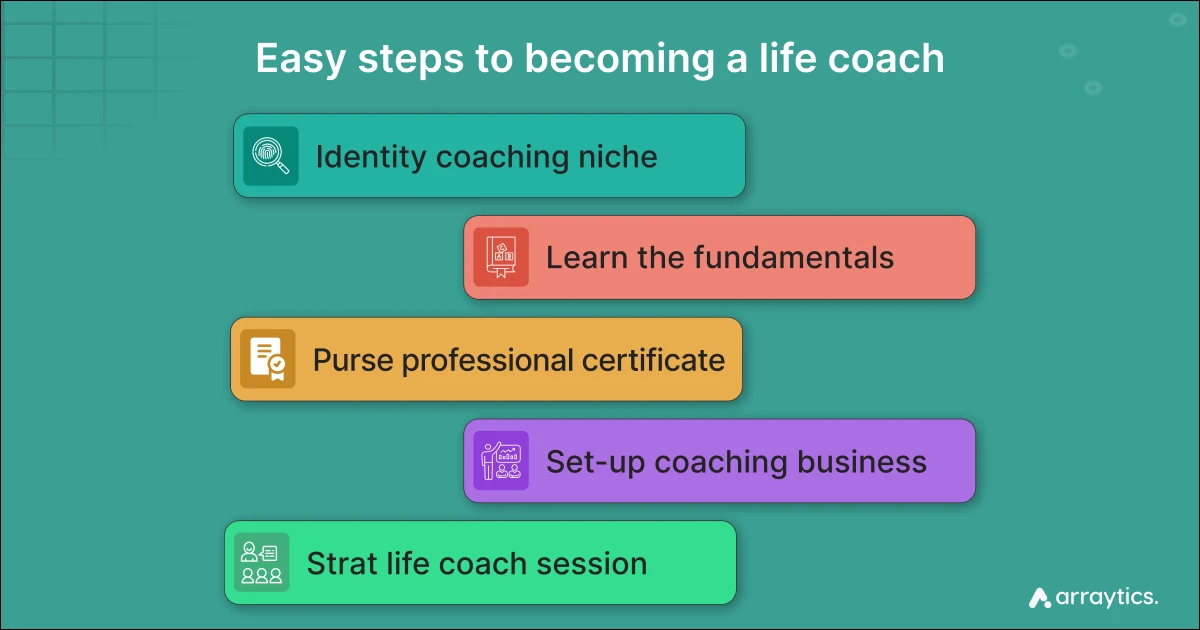
You don’t need years of training to start your journey as a life coach. You just need the right steps and a clear plan. These five steps will help you learn the skills, set up your coaching business, and build a brand people can trust.
Let’s start with the first one.
Step 1: Choose your coaching niche
Your niche is the first thing you should decide before starting your coaching journey. A niche tells people who you help and what results you guide them toward. When this is clear, clients trust you faster because they know you understand their exact problems.
How to find your niche
- Look at your life experience and training:
Start by checking the challenges you’ve already overcome and the skills you’ve learned through your own journey. Your personal growth often points to the areas where you can guide others with real understanding.
- Identify who you can help most:
Think about the people who naturally come to you for advice. It could be friends, coworkers, students, or family members. This group often shows who trusts your voice and where your niche may fit.
- Match your strengths to a specific problem:
Choose one main problem you can solve, such as confidence, career direction, stress, or habits. A niche becomes clear when your strength connects with a real need someone has.
Popular niche ideas to inspire you
- Career and job change
- Confidence and self-esteem
- Wellness and healthy habits
- Stress and burnout
- Relationship support
- Life balance
- Productivity and focus
- Business and entrepreneurship
Note: Your first niche doesn’t need to be perfect. You can start with one area and refine it as you grow. The goal is to begin with clarity, not pressure.

Step 2: Enroll in a training program and learn the fundamentals of coaching
Once you choose your niche, your next step is learning how real coaching works.
Coaching is not giving advice or telling people what to do. It’s a skill. And like any skill, you need proper training to do it well and guide someone safely.
A good training program teaches you the core coaching skills every new coach needs. These include how to:
- Ask strong, clear questions that help clients think deeper
- Listen actively, without interrupting or jumping to conclusions
- Guide someone toward action while still letting them make their own choices
- Structure a coaching session so it feels smooth and helpful
- Set ethical boundaries so you coach with care and professionalism
Where you can learn the basics
You don’t have to start with expensive programs. Many beginners start by learning from:
- Coaching books
- Online coaching courses
- Free YouTube lessons
- Webinars and workshops
- Short beginner-friendly coaching classes
These help you build your foundation and understand the coaching process before working with real clients.
When you’re ready, explore professional certifications
📚 Related reading: How to Build a Booking Marketing Funnel That Actually Works 👉 Read more
Step 3: Pursue professional certification and get certified
If you want to take your coaching career further, especially with business clients or corporate work, you can consider certifications like:
- ICF (International Coaching Federation) – the most recognized worldwide
- CPCC (Co-Active Training Institute) – strong for relationship and personal growth coaching
- NLP-based coaching programs – great for mindset and communication skills
These programs take time and money, but they boost your confidence and credibility. You can always start learning the basics first, then take certification later when you feel ready.
Step 4: Now set up your coaching business
Once you’ve learned and earned professional certificate, it’s time to set up your coaching business. This step may sound serious, but it’s actually simple. You just need a few basic things in place so clients can find you, book you, and pay you without confusion.
There are a few common ways to start your coaching business:
A. Start with one-on-one sessions: This is the easiest way to begin. You coach clients over Zoom or Google Meet. No fancy office needed.
B. Offer coaching packages: Instead of charging per session, you create a small package—like “4 sessions per month” or “6-week confidence coaching.” Packages feel more structured and give consistent results.
C. Try group coaching: If you’re comfortable, you can coach small groups. This helps you reach more people at once and earns you more with the same time.
D. Sell digital resources: Some coaches create small guides, worksheets, or mini-courses. These are great side income ideas once you have a few clients.
You should set up the following things as soon as possible:
- A simple way for clients to book sessions
- A clear service list (what you offer and who it’s for)
- A way to accept payments (PayPal, Stripe, etc.)
- A quiet place to coach without distractions
The best way to handle everything and build your brand is to make a website where people can book appointments, and you can keep track of your schedule.
Step 5: Create your appointment booking website for your life coach session
Your online presence is your digital identity. It tells clients who you are, what you do, and why they can trust you.
If you want people to find you and book sessions easily, you need a simple appointment booking website that works 24/7—even when you’re offline.
To run your life coaching business online, you only need two things:
- A WordPress website
- A powerful appointment booking plugin that handles your schedule, bookings, meetings, and payments
For this tutorial, we’ll use WP Timetics because it’s built for coaches and consultants who need a clean way to manage sessions without constant back-and-forth messages.
It handles everything, from booking to payments, and helps you focus on coaching.
Let’s walk through how to set it up.
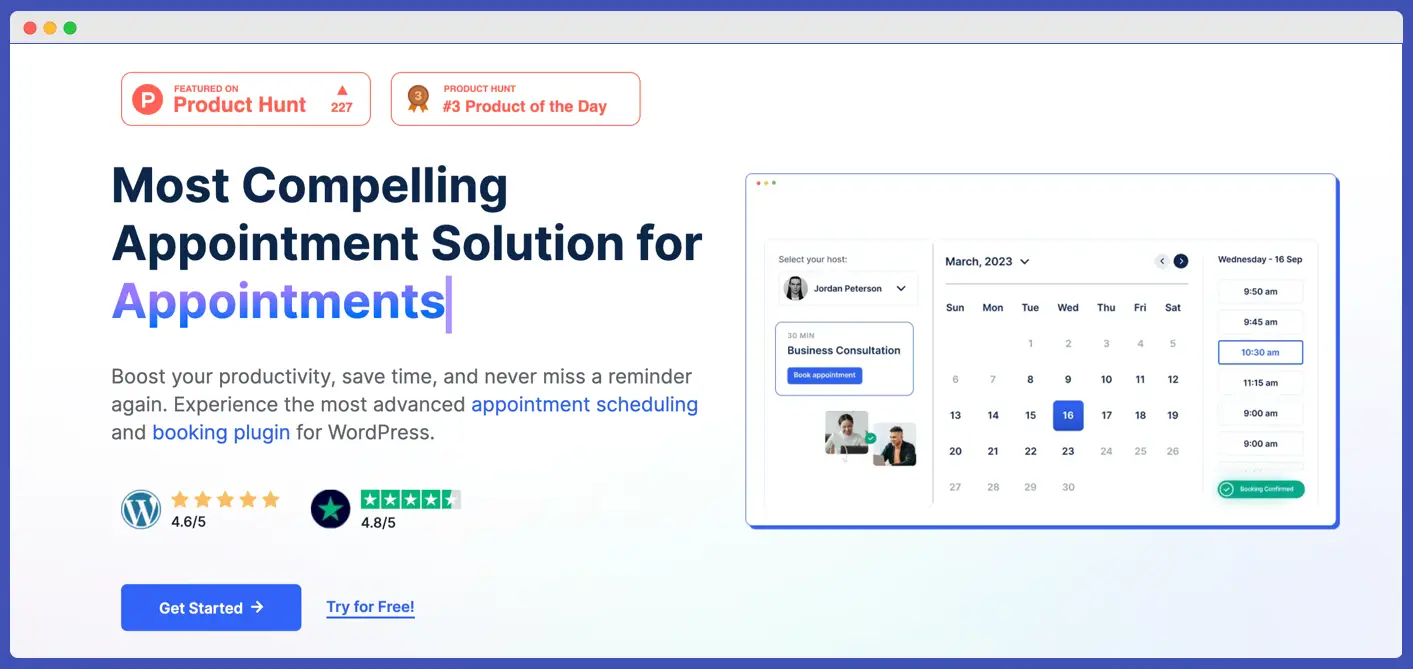
Install and set up WP Timetics appointments
First, you need to install the WP Timetics plugin on your WordPress website. The setup is simple and takes only a few minutes.
• Go to your WordPress dashboard: Click Plugins → Add New and search for “WP Timetics.”
• Install and activate the plugin
• Complete the basic setup
After activation, WP Timetics will guide you through a quick setup.
This is where you:
- Add your working days
- Set your available hours
- Choose your session duration (for example: 30 minutes, 60 minutes)
- Add buffer time if needed between appointments
- Select whether you offer 1:1 coaching or group sessions
WP Timetics gives you a clean dashboard where you can manage all your schedules, time slots, and session types in one place.
Create meetings, schedule, and set up a booking calendar
Once WP Timetics is installed, your next step is to create the actual coaching sessions you want to offer. This is where you set up your meeting types, define your working hours.
Here’s how to do it: Create your coaching meetings
Go to Timetics → Meetings and click Add New.
Here you can set:
- The name of your session
(Example: Life Coaching Session, Confidence Coaching, Career Guidance Call) - The duration (30 min, 60 min, 90 min, etc.)
- The price for each session
- Whether it is a 1:1 session or a group session
- The maximum number of attendees (for group coaching)
Each meeting you create becomes something your clients can book directly.
📕 For more information, please check the Full Documentation.
Connect all schedules to Google Meet or Zoom and always sync
Life coaching happens mostly online, so you need a booking system that can automatically create meeting links and sync your schedule without extra work. WP Timetics makes this part easy.
• Connect to Google Meet or Zoom
Go to Timetics → Integrations, choose your platform, and sign in.
Once connected, WP Timetics will:
- Automatically create a meeting link for every new booking
- Add the meeting to your calendar
- Attach the link to the client’s confirmation email
- Save the meeting details inside your dashboard
You don’t have to create links manually ever again. No manual link-sharing needed.
• Keep everything synced
When a client books a slot, both your WP Timetics calendar and your Google/Zoom calendar update instantly. This prevents double bookings and keeps your schedule clean.
📕 For more information, please check the Full Documentation.
Add payment gateways to receive payments
To get paid for your coaching sessions, you need a simple and secure way for clients to pay online. WP Timetics supports popular payment gateways, so you can collect payments without sending manual invoices.
• Connect your payment methods
Go to Timetics → Payment Settings and choose the option you want to use.
You can enable:
- Stripe
- PayPal
- Woocommerce
Once the payment gateways are connected, clients can pay during the booking process.
WP Timetics handles everything automatically: Smooth payment experience
- Clients choose a time
- Complete payment
- Receive a confirmation email
This makes your coaching business feel professional and saves you time.
📕 For more information, please check the Full Documentation.
Enable recurring bookings and repeat your consultations
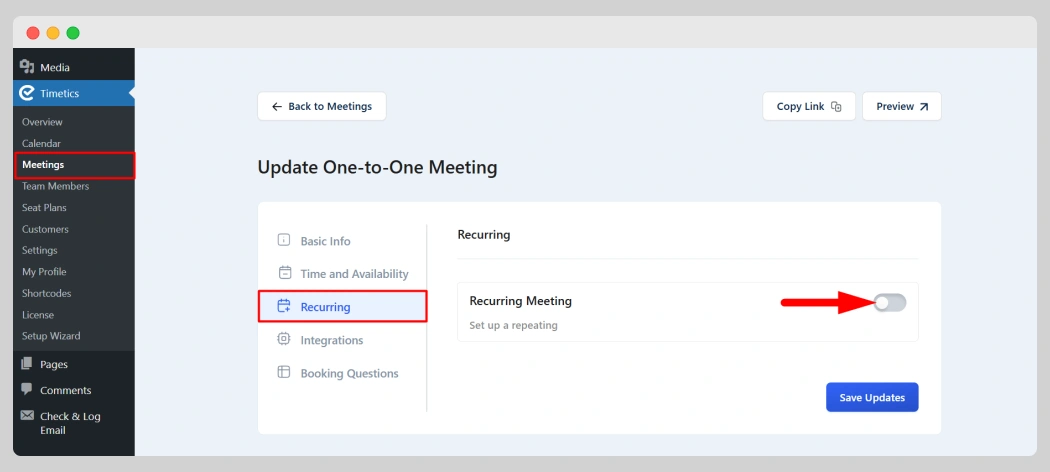
Many coaching clients meet weekly or monthly, so having a way to book repeating sessions makes your work easier.
WP Timetics lets you enable recurring bookings, so clients can book several sessions at once without doing it manually every time.
• Turn on recurring bookings
Inside your meeting settings, you can allow clients to book multiple sessions based on your schedule.
• Make coaching smoother
With recurring bookings, clients can:
- Lock in weekly or monthly sessions
- Follow a consistent coaching routine
- Stay committed to long-term progress
And you don’t need to manage each booking manually — WP Timetics updates your calendar automatically.
Ready to Run Your Life Coaching Sessions with Less Stress?
With WP Timetics, you can manage your entire coaching flow in one place. Clients can book a time, pay online, and receive their meeting link automatically.
- Show a clear booking calendar for your coaching sessions
- Send Google Meet or Zoom links automatically
- Accept payments during booking
- Allow recurring sessions for long-term clients
Set it once, and let your site handle your bookings while you focus on coaching.
Get Started with WP TimeticsIs life coaching a good career in 2026?
Life coaching is meaningful, flexible, and full of growth opportunities. If you enjoy guiding others and want a career that makes a real impact, 2026 is a great year to start.
Remember: It’s not a “quick money” job, but with consistency and the right skills, it can become both fulfilling and profitable.
People want help with stress, confidence, career changes, relationships, and overall balance, and coaches play a big role in that. With more companies, entrepreneurs, and individuals looking for structured support, the coaching industry continues to grow every year.
📚 Related reading: How to Upsell Your Services For Extra Earnings with a Booking System 👉 Read more
Frequently asked questions (FAQs)
1. Do I need a degree to become a life coach?
No, you don’t need a degree. Most life coaches start with basic training, online courses, or certification programs. What matters most is your ability to guide people, ask the right questions, and offer a safe space for growth.
2. How long does it take to become a life coach?
You can start within a few weeks if you take a beginner-friendly training program. Full certification may take a few months, depending on the course you choose.
3. Is life coaching the same as therapy?
No. Therapy focuses on healing past trauma and mental health issues. Life coaching focuses on goals, personal growth, habits, and future direction. Coaches help clients move forward, not diagnose or treat mental health problems.
4. How much does a life coach earn?
Income varies. New coaches may start small, while experienced coaches can earn $50k to $100k+ per year. Income depends on your niche, experience, pricing, and how consistently you attract clients.
5. Can I start life coaching part-time?
Yes. Many coaches start part-time while working another job. Coaching is flexible, and you can grow at your own pace until you’re ready to go full-time.
6. Do I need a website to offer life coaching?
A website is not required, but it makes you look more professional and helps clients book sessions easily. With an appointments tool like WP Timetics, clients can pick a time, pay, and join a session without messaging you back and forth.
7. What niche is best for new life coaches?
There is no “best” niche. Choose the area you feel comfortable with — confidence, career, stress management, relationships, or personal development. Pick a niche based on your own experience and the type of people you enjoy helping.
8. How do I get my first coaching clients?
Start by offering free or low-cost sessions to build confidence. Share your coaching on social media, join relevant groups, and add a booking link. Over time, testimonials and referrals help you attract more clients.
9. Do I need certification to charge for coaching?
Certification is not required, but it adds credibility. If you want to work with high-paying clients or corporate teams, certification from ICF or similar organizations can help.
10. Can life coaching be a stable career?
Yes, if you treat it like a business. With clear offers, consistent visibility, and proper tools for scheduling and payments, coaching can become a stable, long-term career.