
7 Best AI Customer Support Software for Ecommerce Businesses
 Ishrat Zahan
33 minutes read
Ishrat Zahan
33 minutes read 
Ecommerce businesses need fast customer support for order tracking, delivery questions, returns, product information, and checkout concerns. AI customer support software helps automate repetitive conversations while allowing human agents to focus on issues that require judgment, empathy, or account-specific investigation.
The best option depends on your ecommerce platform, support volume, team size, and budget. ThriveDesk is a practical choice for WooCommerce-focused support, Gorgias is built for ecommerce teams with high ticket volumes, Tidio offers an accessible route into AI chat, and Zendesk AI is designed for more complex service operations.
In this guide, we compare seven ecommerce customer support tools based on their integrations, AI capabilities, pricing structure, ease of use, scalability, and ideal use cases.
How We Selected the Best AI Customer Support Software
We evaluated each platform by reviewing its current official product, integration, help-center, and pricing information. The main criteria were ecommerce integrations, AI automation, customer communication channels, human handoff, ease of setup, pricing structure, scalability, and suitability for different store sizes. Features and prices can change, so confirm the latest plan details on each provider’s official website before purchasing.
Why Should Ecommerce Businesses Use AI Customer Support Software?
AI customer support software can answer routine questions, surface order information, recommend relevant help content, and route conversations to the appropriate agent. This can improve response speed without removing human support from complex or sensitive cases.
- Provide assistance outside normal business hours.
- Reduce the time agents spend answering repetitive questions.
- Support customers across email, chat, social, and other available channels.
- Connect conversations with customer, order, and delivery information.
- Keep human agents available for complaints, disputes, and unusual requests.
For practical ways to extend automation across your website, explore our guide to using AI in WordPress.
Customer support tools can answer product questions, but a clearer buying experience can prevent some of those questions in the first place.
WooCommerce stores that sell customizable products can use Optiontics from ThemeWinter to offer product options, add-ons, and personalized choices directly on the product page.
Quick Comparison of the Best Ecommerce Customer Support Tools
| Software | Best For | Pricing Model | Main Limitation |
|---|---|---|---|
| ThriveDesk | WooCommerce teams | Subscription by team size | Check advanced reporting and AI limits |
| Gorgias | High-volume ecommerce | Ticket volume plus AI resolution fees | Seasonal overages can increase costs |
| Zendesk AI | Large support teams | Per-agent plans plus AI usage | Higher setup complexity and total cost |
| Tidio | Small stores starting with AI chat | Plan plus AI conversation limits | Usage costs grow with volume |
| Crisp | Omnichannel support teams | Per-workspace plans | Advanced AI may need a higher plan |
| Help Scout | Email-first support teams | Free and paid plans | Less deep ecommerce automation |
| Intercom | Digital and enterprise teams | Per seat plus Fin outcomes | Total cost can scale quickly |
What Are the Best AI Customer Support Software Tools for Ecommerce?
1. ThriveDesk
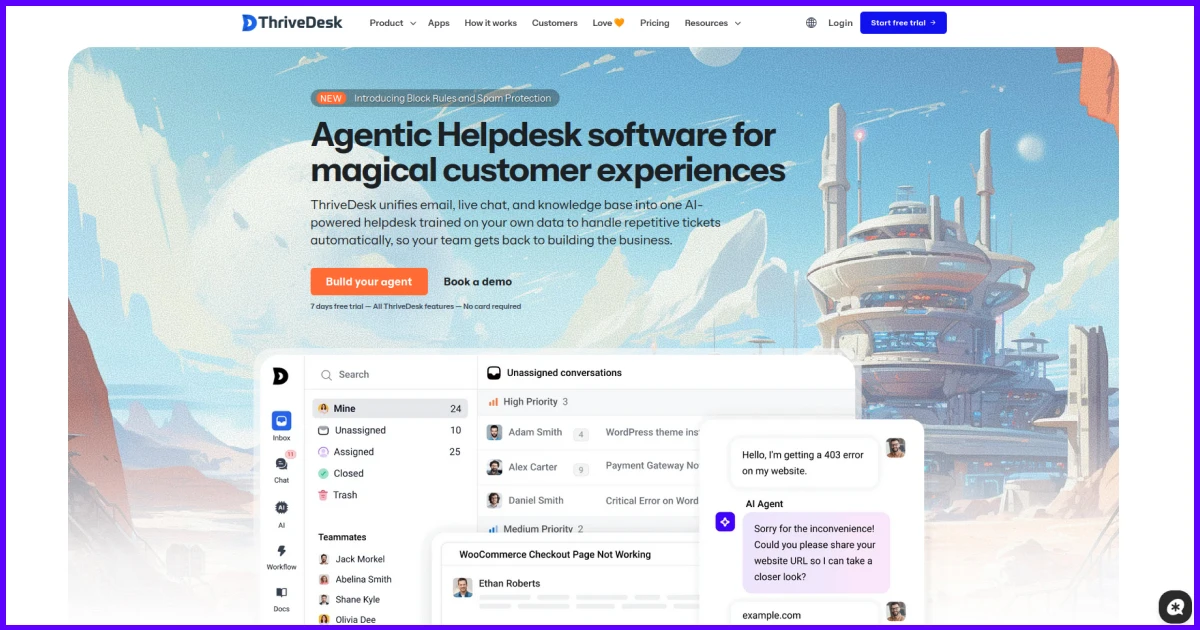
ThriveDesk operates as a dedicated support system that serves online retailers and WordPress site administrators through its fast and lightweight platform. The system offers users a unified workspace that merges team inbox sharing with live chat functionality and self-service options.
The platform contains a virtual assistant that learns from your website content, including product details, policy information, and site documentation.
ThriveDesk operates as a simple solution that enables quick setup and provides an easy-to-understand user interface and straightforward cost structure to become the leading AI customer support system for ecommerce businesses that need complete system trustworthiness.
Key Features
- Live chat assistant
- WooCommerce synchronization
- Shared team inbox
- Knowledge base
- Automated ticket routing
Pricing Model
Affordable monthly plans without hidden usage penalties.
Why Choose It
It provides total support automation tailored specifically for WordPress and WooCommerce store setups.
Best For
Small and medium WooCommerce businesses wanting fast, reliable customer assistance.
2. Gorgias
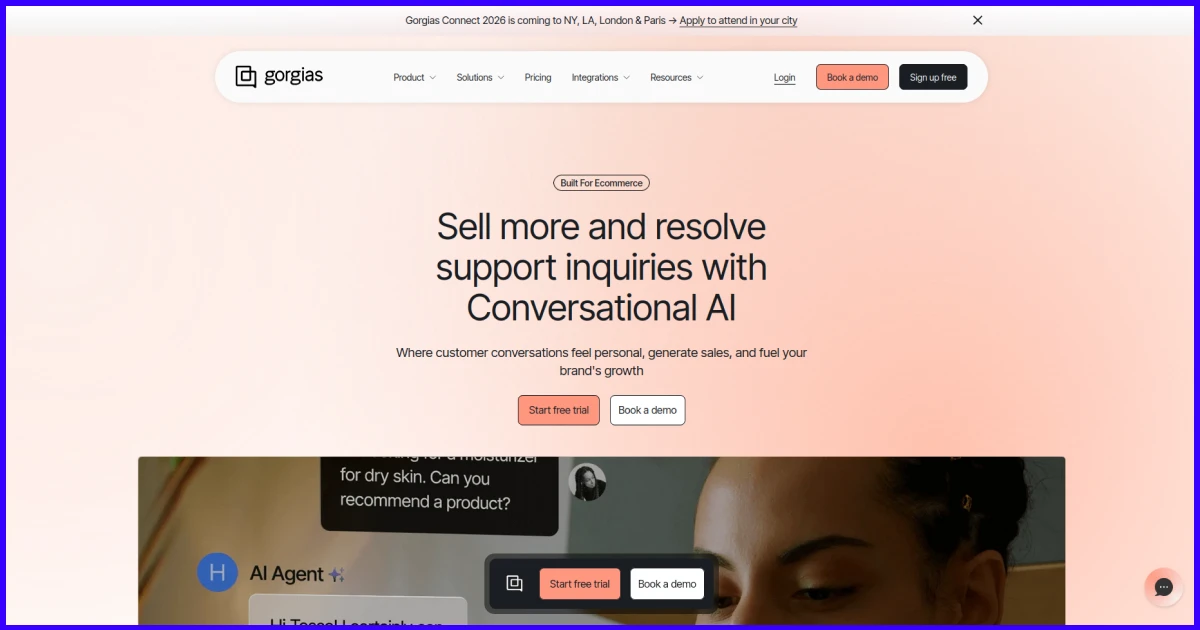
Gorgias is a popular helpdesk tailored for online stores built on Shopify, BigCommerce, and WooCommerce. It pulls customer details, order histories, and delivery timelines into a central dashboard.
Its automated rule builder allows stores to dispatch immediate replies for standard inquiries about shipping numbers and address changes. Configuring detailed automation rules can take time, but it remains a prominent option among ecommerce customer support tools.
Key Features
- Multi-channel inbox
- Automated order editing
- Response macros
- Store revenue tracking metrics
Pricing Model
Tiered plans based on monthly support ticket limits.
Why Choose It
It handles multi-channel order management seamlessly for Shopify stores.
Best For
High-volume Shopify retailers managing frequent order edits.
3. Zendesk AI

Zendesk is a well-known enterprise platform offering advanced ticket handling capabilities for massive organizations. It studies ticket context to offer agent recommendations and handle standard customer inquiries automatically.
While Zendesk provides vast customization options and detailed analytics, the setup process and higher cost make it less practical for smaller merchants. However, for huge retail brands requiring multi-department routing, it is a sturdy choice.
Key Features
- Enterprise ticket management
- Predictive data insights
- Custom workflow triggers
- Extensive third-party integration options.
Pricing Model
Custom per agent seat pricing.
Why Choose It
It handles multi-department enterprise workflows with strict compliance standards.
Best For
Large-scale retail enterprises with multi-channel support teams.
4. Tidio
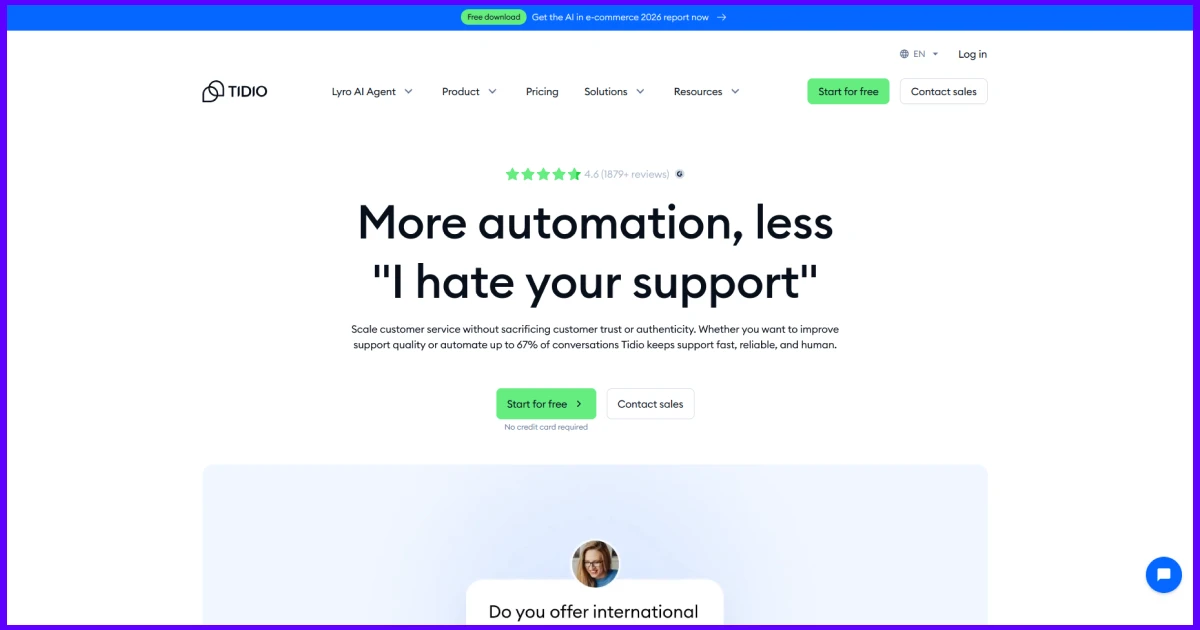
Tidio merges live chat features with an artificial intelligence engine named Lyro. Lyro studies your store help articles and answers buyer questions conversationally without requiring complex visual flowchart setups.
It works well for store owners who want simple live chat installation along with proactive popups that engage visitors browsing important product pages. It is a solid entry among modern ecommerce customer support tools.
If product-page confusion is generating too many pre-purchase questions, it is also worth checking why your WooCommerce product page isn’t converting before relying on support automation alone.
Key Features:
- Conversational bot engine
- Proactive visitor popups
- Visual chat flow builder
- Real-time visitor lists
Pricing Model
Free starter tier with paid tiers for higher conversation numbers.
Why Choose It
It enables quick live chat setup with minimal technical steps.
Best For
Small business owners starting out with live chat.
5. Crisp AI
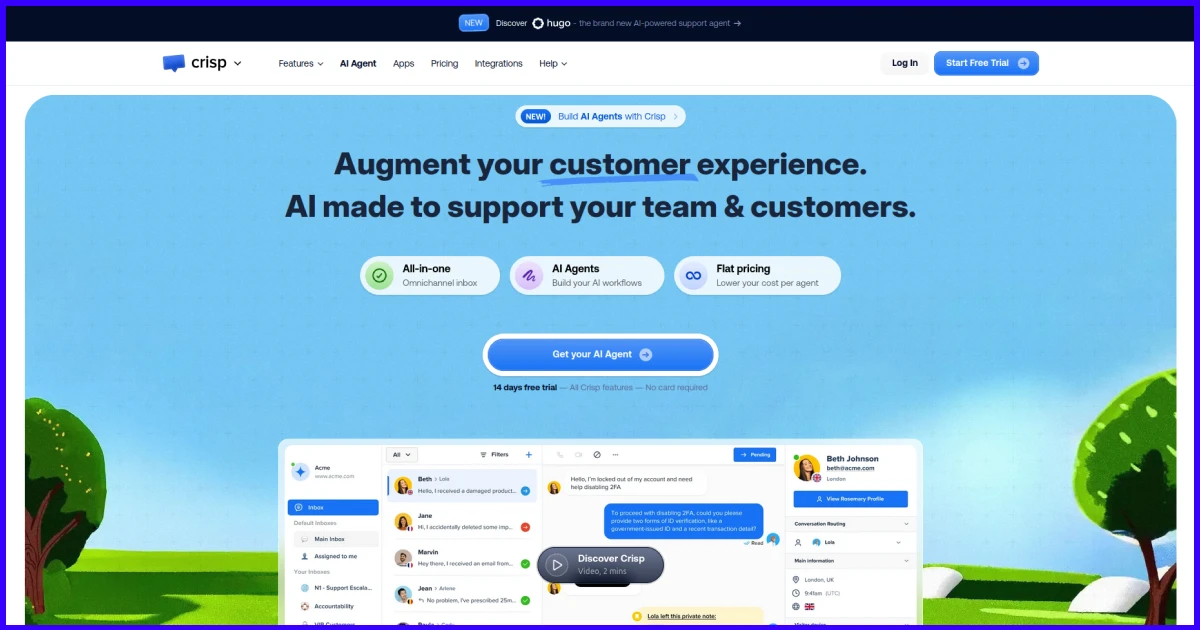
Crisp is a unified customer messaging platform offering live chat, shared inbox functions, and automated scenario builders. Its scenario builder allows store owners to create interactive chat flows that guide visitors to products or resolve policy questions.
Crisp offers real-time co-browsing capabilities, enabling support agents to view buyer screens and help them through checkout obstacles directly.
Key Features:
- Visual chat builder
- Live screen co-browsing
- Multi-channel inbox
- Visitor status tracking
Pricing Model
Flat rate monthly workspace pricing rather than per seat costs.
Why Choose It
Flat pricing makes software costs predictable regardless of team size.
Best For
Growing retail startups seeking cost-effective helpdesk software.
6. Help Scout
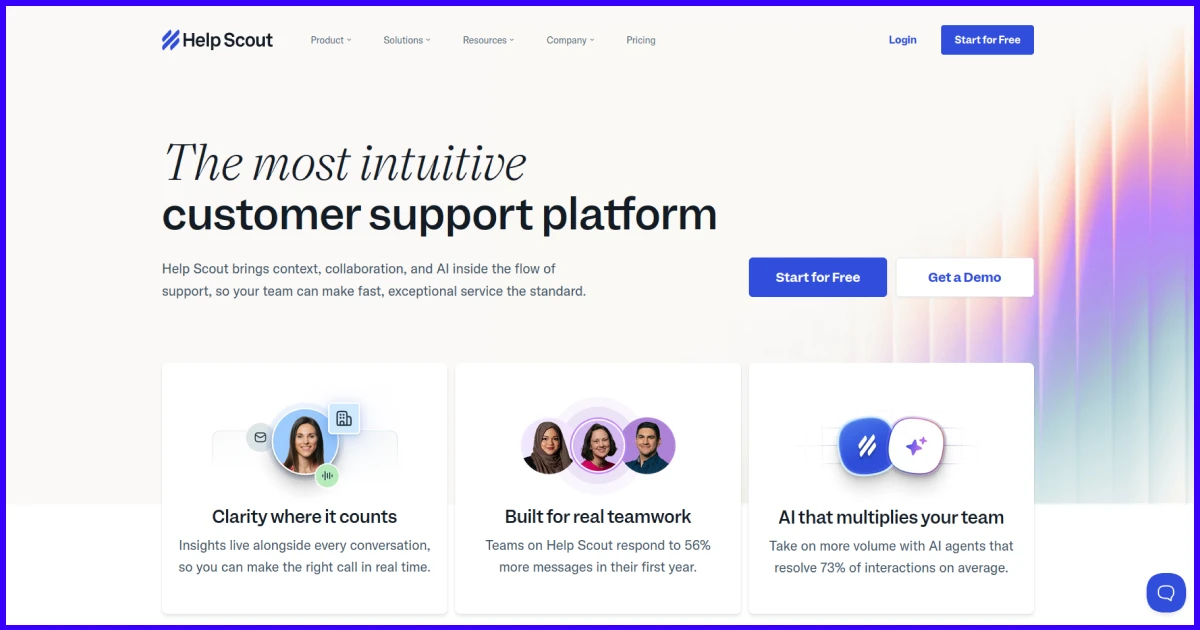
Help Scout offers a clean email-style helpdesk alongside an intuitive live chat widget called Beacon. Its clean design feels like a standard email workspace, making it simple for team members to adopt quickly.
Help Scout uses smart search capabilities to present help articles inside the chat widget before a customer submits a ticket. It is a reliable addition to any set of ecommerce customer support tools.
Key Features
- Shared team email inbox
- Beacon chat widget
- Self-service docs builder
- Customer satisfaction tracking
Pricing Model
Monthly per-user pricing tiers.
Why Choose It
It preserves a human email feel while offering shared team features.
Best For
Businesses focusing on personalized email support and documentation.
7. Intercom
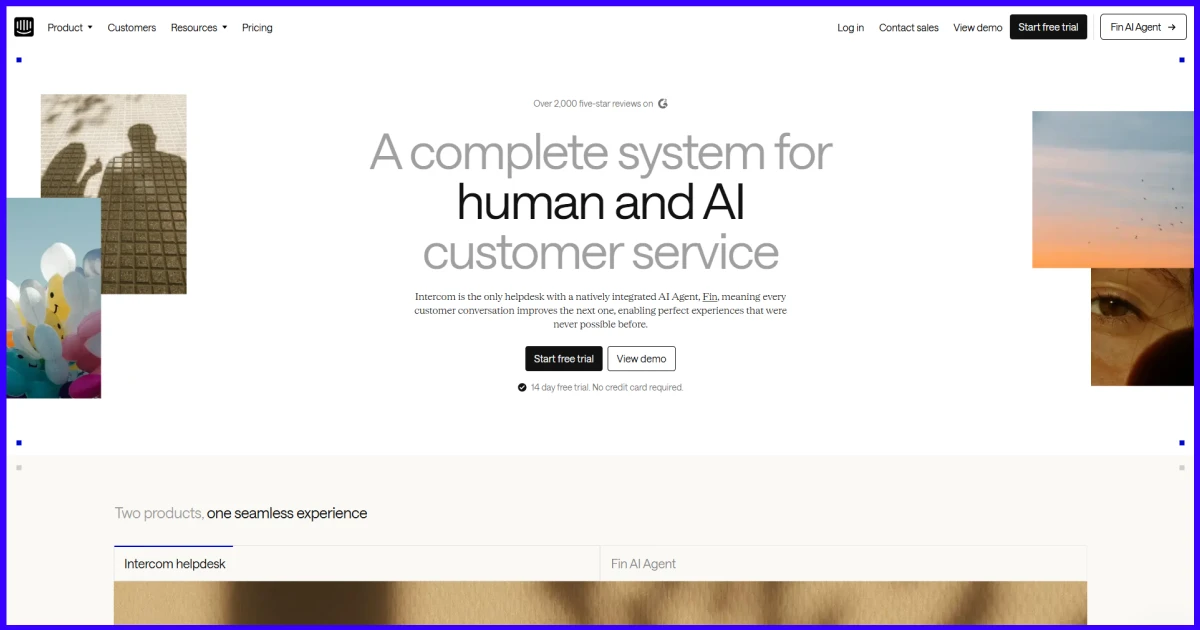
Intercom is a prominent customer engagement platform featuring Fin, an advanced conversational bot built on modern language models. Fin answers complex support questions by drawing data directly from verified internal articles.
While Intercom offers sophisticated tools and target user segmentation, software costs can grow rapidly based on user volume and bot resolution fees.
Key Features
- Conversational assistant
- Proactive customer messaging
- Interactive product tours
- Queue management controls.
Pricing Model
Modular pricing based on active user counts and resolution volume.
Why Choose It
It delivers advanced conversational answers drawn directly from support docs.
Best For
Tech platforms and large digital retail companies with larger budgets.
How Do You Choose AI Customer Support Software for Your Ecommerce Store?
Confirm Ecommerce Platform Integration
Check whether the software connects directly with WooCommerce, Shopify, BigCommerce, or your custom store. Confirm exactly which actions the integration supports, such as viewing orders, changing addresses, issuing refunds, or checking delivery status.
If your store sells subscriptions, review these common WooCommerce subscription issues and troubleshooting tips when preparing support workflows for payment and renewal questions.
Evaluate the AI Capabilities
Determine whether the product only provides a chatbot or also supports AI answers, ticket summarization, suggested replies, intent detection, automated routing, workflow actions, and knowledge-base grounding. Select capabilities that solve real support tasks rather than adding AI for appearance.
Check Human Handoff Options
AI should transfer complex or sensitive conversations to a human agent with the relevant context attached. Test how the handoff works across chat, email, and other channels so customers are not forced to repeat the same information.
Review Security and Customer Data Access
Identify which customer, conversation, and order data the platform can access. Review permissions, data storage, privacy controls, retention settings, compliance options, and whether business data is used to train external models.
For the WordPress side of your setup, follow our WordPress security guide alongside the provider’s data-access and privacy checks.
Compare the Full Pricing Model
Do not compare only the advertised starting price. Calculate seats, ticket limits, AI conversations or outcomes, overage fees, add-ons, channels, required integrations, and seasonal volume before estimating the real monthly cost.
Prioritize Ease of Setup and Management
Choose a platform your team can configure and maintain. A powerful product may still be a poor fit if routine automation, knowledge updates, reporting, or agent onboarding requires continuous technical support.
Customer support is one part of the post-purchase experience. Stores focused on repeat purchases can also complement their support stack with a WooCommerce loyalty solution like Pointics to reward purchases, referrals, and ongoing customer engagement.
FAQ
What is the best AI customer support software for ecommerce?
The best option depends on your platform and support requirements. ThriveDesk is practical for WooCommerce-focused teams, Gorgias supports ecommerce-heavy workflows, Tidio offers an accessible AI-chat starting point, and Zendesk AI is better suited to complex service operations.
Can AI customer support software replace human agents?
AI can automate repetitive questions, surface help content, and perform approved workflows. Human agents are still necessary for complaints, payment disputes, unusual account problems, sensitive conversations, and cases requiring judgment or empathy.
Which AI customer support tool is best for WooCommerce?
ThriveDesk is one practical WooCommerce option because it combines support conversations, a shared inbox, knowledge resources, automation, and store context. The best choice still depends on required channels, team size, reporting, AI limits, and budget.
How should an ecommerce store compare AI helpdesk pricing?
Compare the total cost of seats, ticket volume, AI conversations or outcomes, overages, add-ons, channels, and integrations. Estimate both normal and peak-season usage before selecting a plan.
Conclusion
AI customer support software can help ecommerce businesses answer repetitive questions faster, provide order-related assistance, and reduce the manual workload placed on support agents.
The right platform depends on the store system, monthly support volume, required channels, AI use cases, security requirements, and budget. WooCommerce teams may consider ThriveDesk, ecommerce-heavy support teams may prefer Gorgias, smaller stores can evaluate Tidio, and complex departments may require Zendesk AI or Intercom.
Before making a final decision, test the human handoff, confirm the exact ecommerce actions supported by the integration, and compare current features, limits, and pricing on each provider’s official website.