25 Appointment Scheduling Statistics for 2026 Every Business Should Know
 Mayeesha Farin
28 minutes read
Mayeesha Farin
28 minutes read 
Appointment scheduling affects how customers find available times, complete bookings, and manage upcoming appointments. A slow or confusing process can increase abandonment, while online booking, reminders, and easy rescheduling can reduce manual work.
Here are 25 appointment scheduling statistics updated for 2026. The figures come from studies and reports published in different years, with the source year identified wherever available.
Quick Appointment Scheduling Statistics at a Glance
The latest appointment scheduling statistics show that online access, booking speed, mobile usability, and automation can influence how customers interact with a business.
Here are six key findings from the full list.
| Key statistic | What it means for businesses |
|---|---|
| 82% of consumers prefer booking appointments online | Self-service booking has become a standard customer expectation |
| 40% of appointments are booked outside business hours | Businesses need 24/7 booking access to capture after-hours demand |
| 65% of appointments are booked on mobile devices | Booking pages must work smoothly on phones and smaller screens |
| SMS reminders increased attendance from 67.8% to 78.6% | Automated reminders can reduce missed appointments |
| Online booking can save businesses up to eight hours per week | Scheduling software can reduce manual calls, coordination, and follow-up |
| 32% of organizations already use AI for scheduling | AI-assisted booking is becoming part of normal scheduling workflows |
These figures come from surveys, platform reports, and compiled industry research. They provide useful benchmarks, but results can still differ depending on the business, audience, and type of appointment.
How Do Customers Prefer to Book Appointments?
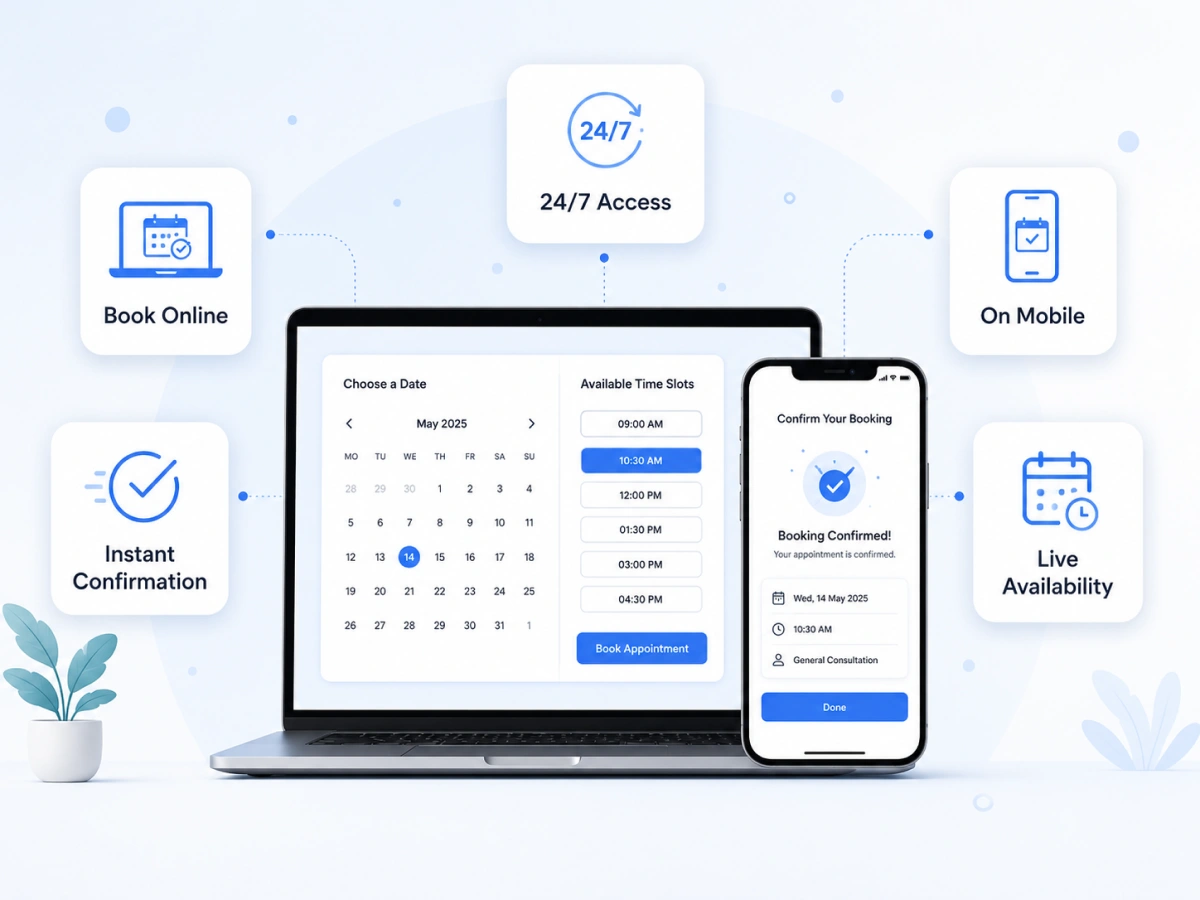
Customers increasingly prefer online scheduling that is quick, available at any time, and easy to use from a phone. They also expect immediate confirmation and real-time access to available appointment slots. The following statistics show how booking preferences are changing.
1. 82% of Consumers Prefer to Book Appointments Online
According to reports, 82% of consumers prefer online appointment booking rather than scheduling by phone. This shows that many customers prefer digital self-service over phone-based scheduling.
2. 75% of Consumers Say 24/7 Booking Availability Is Important
According to reports from Salesforce, 75% of consumers say that being able to book at any time is important to them. Customers may search for a service in the evening, early morning, or during the weekend when staff are unavailable. A 24/7 booking page allows the business to continue accepting appointments outside normal working hours.
3. 48% of Consumers Have Switched Providers Because of a Poor Booking Experience
Around 48% of consumers have switched providers after experiencing a poor booking process. This suggests that appointment scheduling can affect customer choice before the actual service begins. A poor experience can include confusing service options, unavailable time slots, slow confirmation, or too many steps.
4. 90% of Consumers Expect Immediate Booking Confirmation
Around 90% of customers expect immediate confirmation after booking. Without it, they may question whether their chosen time is secure. Moreover, confirmations should include service details, time, location, and rescheduling options.
5. 40% of Appointments Are Booked After Business Hours
Around 40% of appointments are booked outside normal business hours. Customers often schedule when staff are unavailable to answer calls. So, a 24/7 booking page helps businesses capture these appointments automatically.
6. 26% of Customers Book Appointments Within 24 Hours
Around 26% of online appointments are scheduled for the same day or the next day. This shows that many customers want quick access to available services. Real-time availability helps businesses capture these urgent bookings.
7. 54% of Business-Hour Appointments Are Booked on the Go
Around 54% of appointments booked during business hours are made while customers are on the go. This shows that many people schedule from mobile devices. A simple mobile booking page helps them complete appointments quickly.
What Makes an Online Booking Page Convert Better?
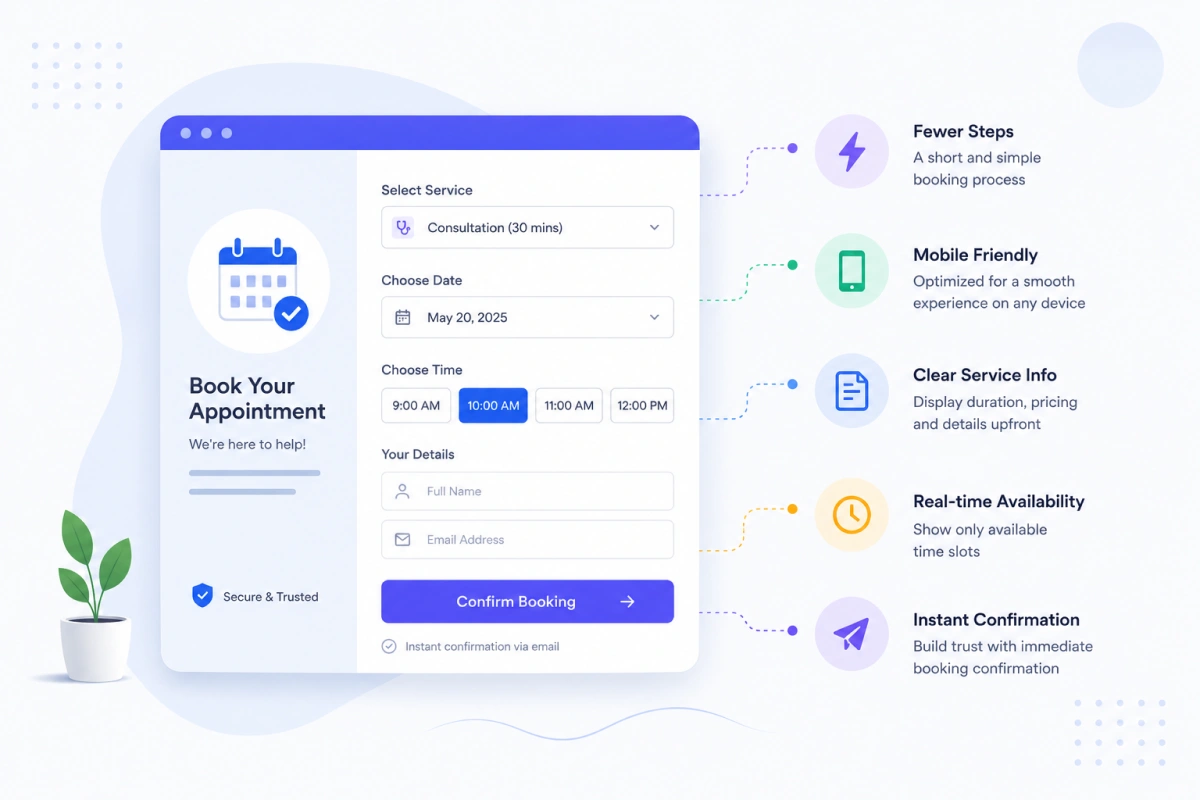
A booking page converts better when it is fast, mobile-friendly, and easy to complete. Short forms, clear service details, real-time availability, and fewer steps can help more visitors finish their bookings. The following statistics show which booking-page elements matter most.
8. The Average Online Booking Page Converts Around 13% of Visitors
SchedulingKit reports that online booking pages convert about 13% of visitors. This means roughly 13 in 100 visitors complete a booking. Businesses can use this as a benchmark and track where customers leave.
9. Mobile-Optimized Booking Forms Can Increase Conversions by 31%
Mobile-friendly booking forms can increase conversions by 31%. Many customers open booking pages from search, email, or social media on their phones. Clear text, large buttons, and simple forms help more users complete bookings.
10. Customers Are 2.8 Times More Likely to Complete a Booking When It Takes Under Two Minutes
Customers are 2.8 times more likely to finish bookings completed within two minutes. A shorter process helps reduce hesitation and abandonment. Ask only for essential details, then collect extra information later.
11. 53% of Users May Abandon a Booking Because of a Poor Mobile Experience
More than half of users may leave when the mobile booking experience is poor. Small buttons, slow pages, and difficult date selection create friction. Test the full process on different phones before publishing.
12. Too Many Steps Cause 46% of Booking Abandonment
Around 46% of booking abandonment comes from having too many steps. Extra pages and fields give customers more chances to leave. Keep pricing, service details, and next steps clear.
How Important Is Mobile Appointment Booking?
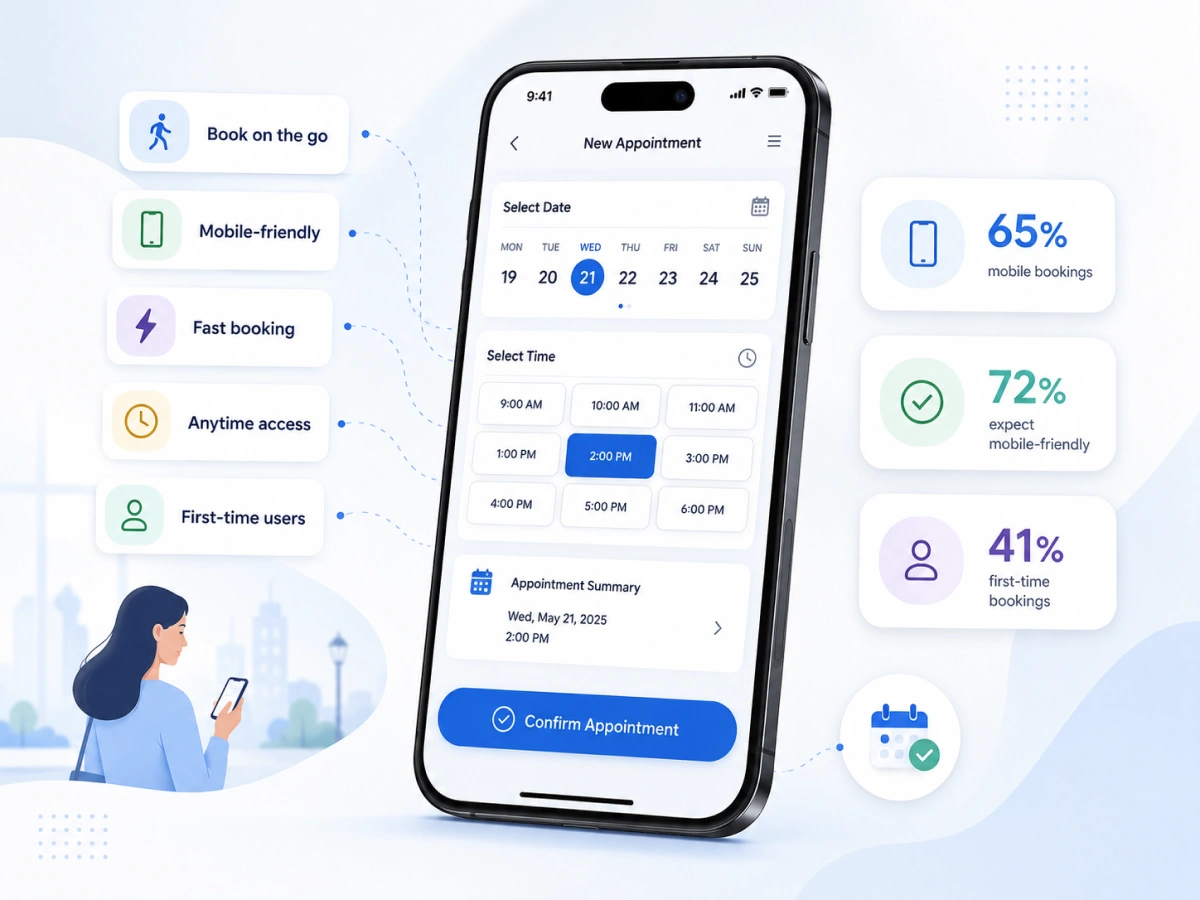
Mobile appointment booking is essential because many customers discover and schedule services from their phones. Booking pages must load quickly, display available times clearly, and allow customers to complete the process without switching devices. The following statistics show why mobile-friendly scheduling matters.
13. 72% of Consumers Expect Booking Pages to Be Mobile-Friendly
Around 72% of consumers expect booking pages to work smoothly on mobile. Poor navigation can make customers leave before choosing a time. Use readable text, large buttons, simple forms, and clear date selection.
14. 65% of Appointments Are Booked on Mobile Devices
Around 65% of appointments are booked through mobile devices. Mobile scheduling is now a primary booking method for many customers. Test service selection, time slots, forms, and confirmations across different screen sizes.
15. 41% of Mobile Bookings Come From First-Time Customers
Around 41% of mobile bookings come from first-time customers. Many discover a business through search and book immediately. Clear services, visible times, and fewer steps can turn these visitors into customers.
How Appointment Reminders Reduce No-Shows?
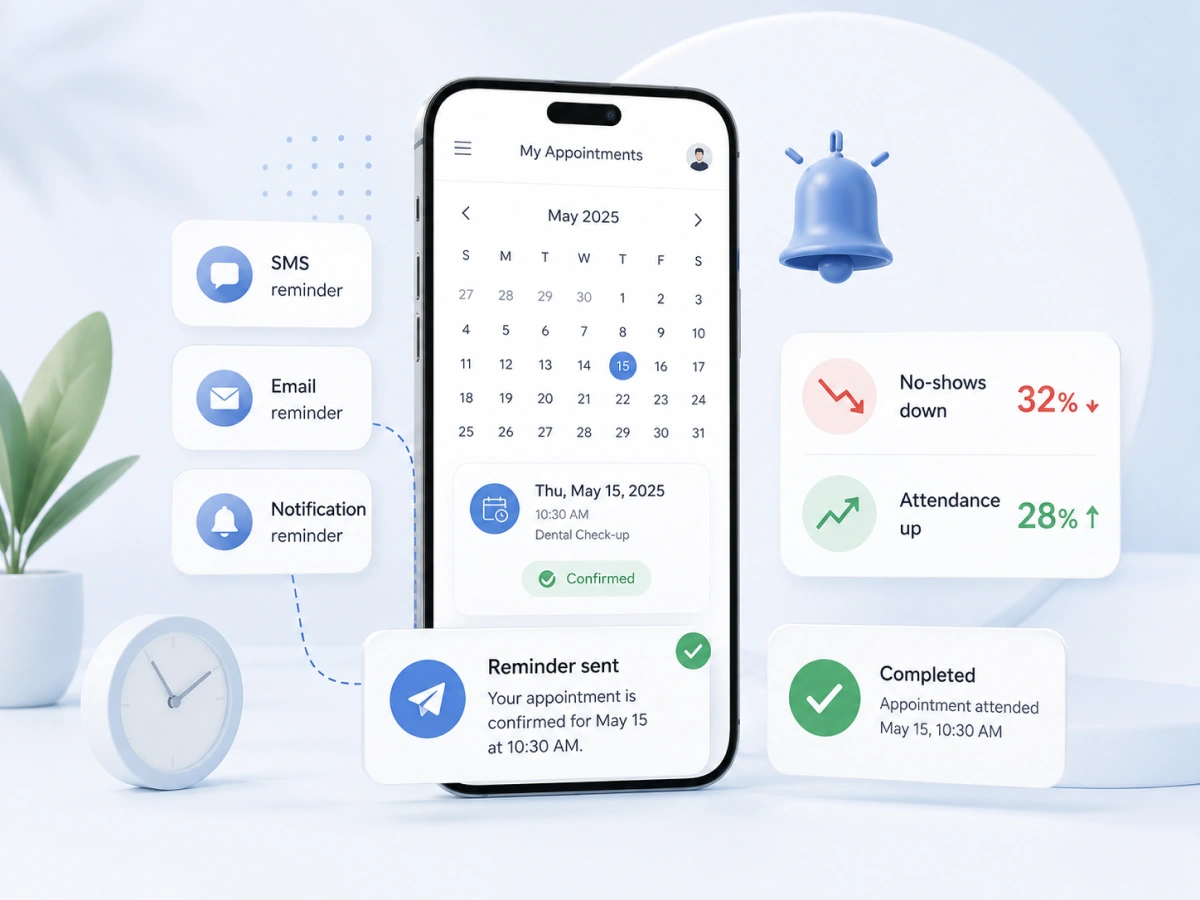
Appointment reminders can improve attendance by helping customers remember and manage upcoming bookings. They also make it easier to confirm, cancel, or reschedule in time. The following statistics compare SMS, phone, and multi-step reminder strategies.
16. Text Reminders Can Improve Appointment Attendance
Most reminder evidence in this section comes from healthcare studies, so results may vary for other appointment-based businesses. Attendance increased from 67.8% without reminders to 78.6% with SMS reminders.
This shows that simple messages can reduce missed appointments. Include the date, time, location, and rescheduling link.
17. Phone Reminders Can Produce Similar Attendance Results
Phone reminders produced similar attendance results, while appointments without reminders had lower attendance.
| Reminder type | Attendance result | Main consideration |
| No reminder | 67.8% | No follow-up before the appointment |
| SMS reminder | 78.6% | Automated and easier to scale |
| Phone reminder | 80.3% | Similar result but requires more staff time |
18. Text Reminders Can Cost Less Than Manual Phone Calls
Text reminders produced similar attendance results at a lower cost. Two studies reported 55% and 65% lower costs than phone calls. Businesses can automate routine reminders and reserve calls for complex bookings.
19. More Than One Reminder May Improve Attendance
Two reminders reduced missed appointments to 4.4%. One reminder produced no-show rates between 5.3% and 5.8%. Businesses can test reminder timing without sending too many messages.
20. Reminder Wording Can Affect Customer Response
Reminder wording can affect whether customers attend, cancel, or reschedule. Clear messages reduced missed appointments without increasing delivery costs. Include the service, date, time, location, and a rescheduling option.
How Much Time Can Online Scheduling Save Businesses?
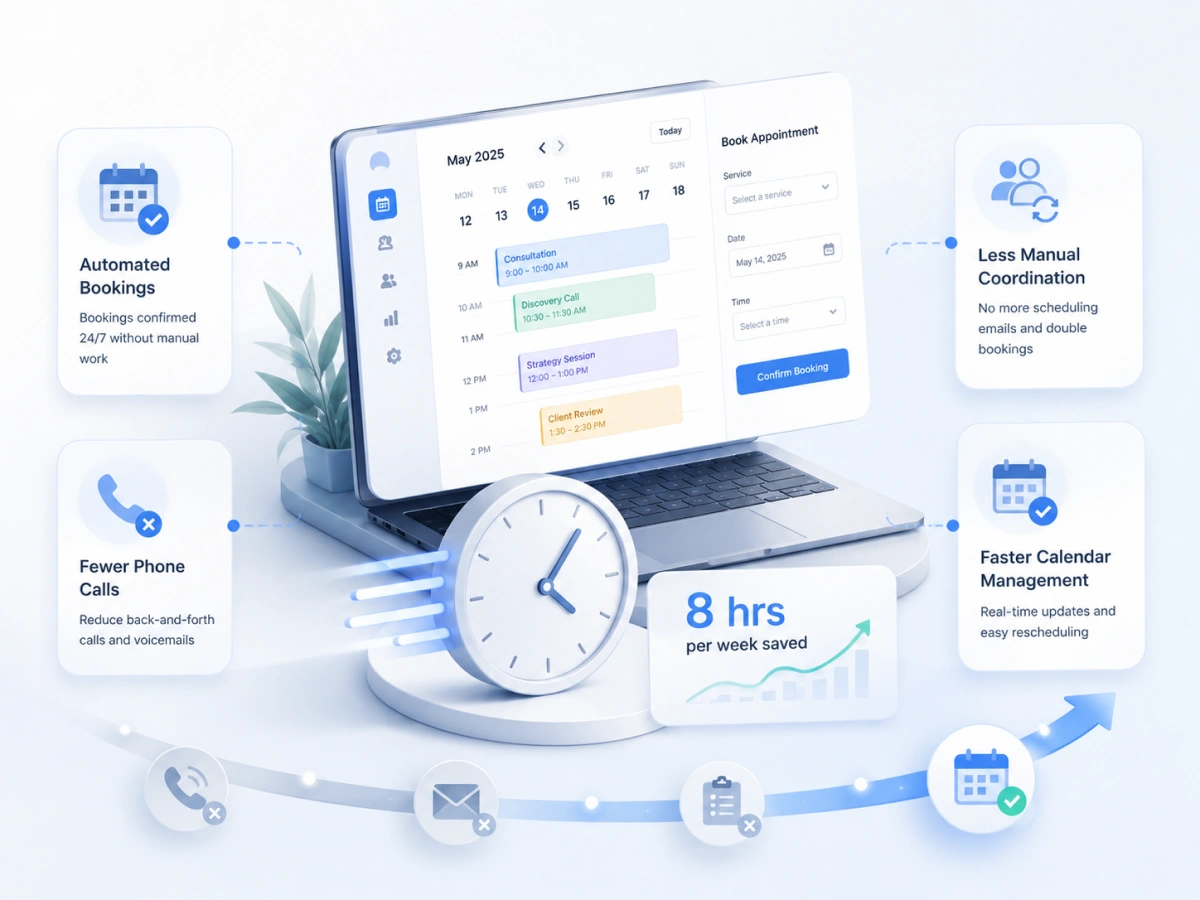
Scheduling tools can reduce manual work and help businesses use appointment slots more effectively. They also make it easier to manage calendars and track booking performance. The following statistics show how online scheduling can improve daily operations.
21. Online Booking Can Reduce Manual Scheduling Work
Online booking can save businesses eight hours weekly and reduce scheduling administration by 26%. Workers still spend about three hours managing meetings each week. Self-service booking reduces calls, coordination, confirmations, and rescheduling work.
22. Better Slot Presentation Can Improve Appointment Fill Rates
Structured slot presentation improved appointment fill rates by 6% to 8%. Some test cases reached an 18% improvement. Show suitable times first and keep availability easy to scan.
How Is AI Changing Appointment Scheduling?
AI is helping businesses suggest meeting times, check availability, update calendars, and handle routine scheduling changes. Recent survey data shows growing adoption, but businesses still need clear permissions and human review for important actions.
23. 32% of Organizations Already Use AI for Scheduling
Around 32% of organizations already use AI for meeting scheduling. These tools can suggest times, route bookings, and update calendars. Businesses should still review important changes and keep clear controls.
Timetics AI supports this type of workflow by helping businesses manage availability, appointment details, and routine scheduling tasks from one platform.
24. 66% Believe AI Can Improve Scheduling Automation
Around 66% of organizations believe AI can improve scheduling automation. AI can find times, check availability, and handle routine changes. It supports booking workflows without replacing the full scheduling system.
25. 63% Are Comfortable With AI Suggesting or Rescheduling Meeting Times
Around 63% of organizations are comfortable with AI suggesting or rescheduling meeting times. This shows growing trust in AI-supported scheduling. Users should still confirm important changes before they are applied.
What Do These Appointment Scheduling Statistics Mean for Businesses?
These statistics show that businesses should focus on faster booking, mobile usability, immediate confirmation, automated reminders, and fewer manual scheduling tasks.
A clear appointment booking strategy helps businesses improve each stage of the customer journey, from discovery to confirmation. General data provides a benchmark, but businesses should also track their own booking completion, cancellation, no-show, mobile, and after-hours booking rates.
- Offer 24/7 online booking.
- Keep the booking process short.
- Test the full flow on mobile.
- Automate confirmations and reminders.
- Review booking performance monthly.
This article uses consumer surveys, scheduling-industry reports, appointment studies, and software-market research.
Original studies were preferred where available, while secondary statistics were treated as general benchmarks. Healthcare reminder research and market forecasts were clearly labeled to prevent broad interpretation.
How Does Timetics AI Solve Common Appointment Scheduling Problems?
Timetics AI is an appointment scheduling software that solves common appointment scheduling problems by automating availability, confirmations, reminders, calendar updates, payments, and rescheduling.
The system also updates calendars when someone books, cancels, or reschedules. Calendar synchronization helps prevent double bookings by blocking times that are already unavailable.
For WordPress users, understanding how to manage appointment booking in WordPress can help create a smoother scheduling workflow.
Automated confirmations and reminders reduce manual follow-up. Businesses can send appointment details, meeting links, cancellation options, and rescheduling instructions without writing each message separately.
Scheduling software also provides useful booking data. Teams can track popular services, busy hours, cancellations, no-shows, and completed appointments to improve availability and reminder timing.
Timetics AI combines online booking pages, availability management, calendar connections, payments, reminders, and multiple appointment types. This makes it suitable for consultants, service businesses, and teams that want to manage bookings from one place.
The right setup still depends on the business. A solo professional may need only a booking page, calendar sync, and payments, while a larger team may need staff schedules, shared access, and detailed reports.
Explore how Timetics AI helps businesses manage bookings, reminders, availability, and payments from one platform.
What features should appointment scheduling software include?
Appointment scheduling software should include online booking, real-time availability, calendar sync, reminders, cancellations, and rescheduling. Businesses may also need payments, staff calendars, multiple locations, and booking reports.
Can appointment scheduling software prevent double bookings?
Yes. Scheduling software checks real-time availability and blocks times that are already reserved. Calendar synchronization also reduces overlapping appointments across staff, services, and connected calendars.
Should customers be able to reschedule appointments themselves?
Yes. Self-service rescheduling reduces calls and gives customers more control. Businesses should still set clear deadlines, cancellation rules, and limits for last-minute changes.
Should businesses charge a deposit for appointments?
Deposits can reduce late cancellations and no-shows for high-value or long appointments. The booking policy should clearly explain the amount, refund terms, and rescheduling conditions.
How often should businesses review appointment data?
Businesses should review appointment data at least once a month. Key metrics include booking completion, cancellations, no-shows, mobile bookings, after-hours bookings, staff workload, and popular appointment times.
Final Thoughts
Appointment scheduling statistics show that customers expect fast, mobile-friendly, and flexible booking. They also value instant confirmation, simple rescheduling, and clear appointment details.
Businesses can respond by offering self-service booking, automated reminders, calendar synchronization, and real-time availability. These tools can reduce manual work and improve how appointment slots are used.
General statistics should still be treated as benchmarks. Businesses should track their own completion, cancellation, no-show, mobile, and after-hours booking rates.
Timetics AI combines booking pages, availability management, payments, reminders, calendar connections, and AI-assisted scheduling. It can help consultants, service businesses, and teams manage appointments with less manual coordination.